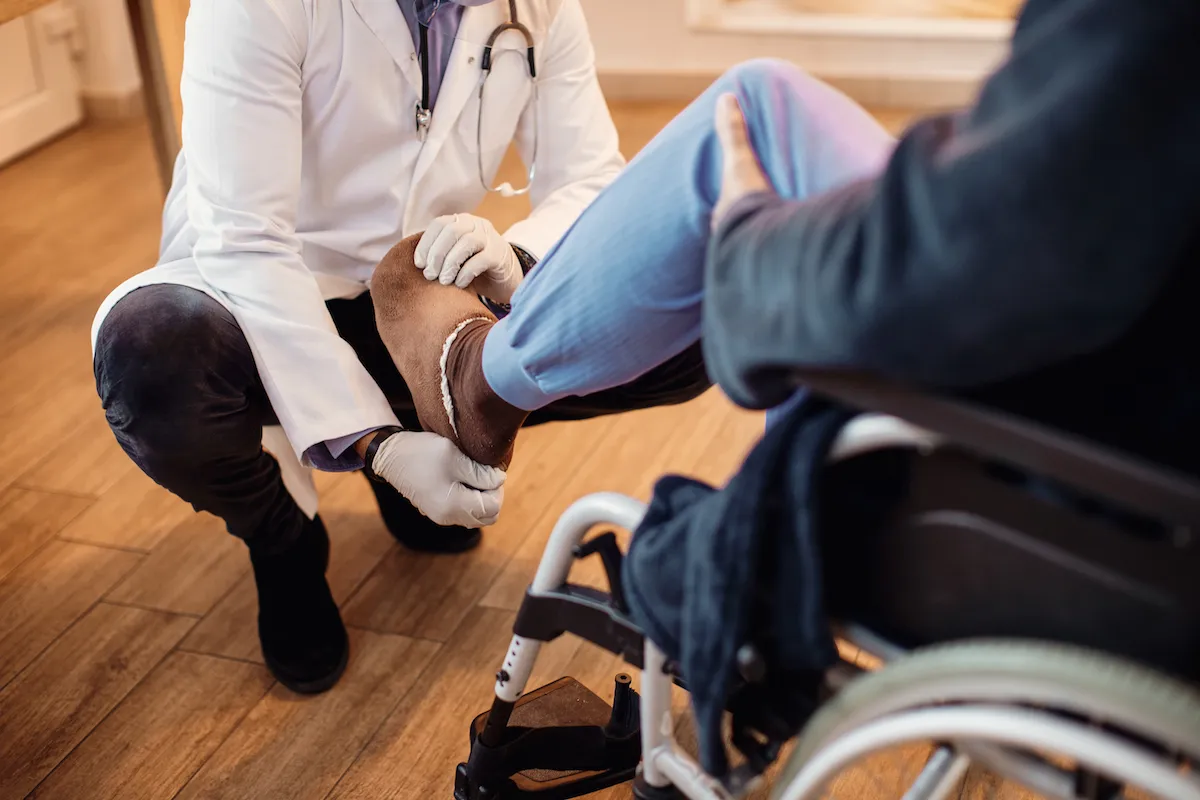
Plenty of people have cold feet in a chilly room. That alone is usually not a worry. But if one foot is cooler than the other, your feet look pale or bluish, your legs ache when you walk, or a sore on your foot is slow to heal, it may be a sign that blood is not flowing well to your legs. A vascular check can tell you.
Harmless cold vs. a circulation problem
Cold hands and feet in winter or air conditioning are normal. The body pulls blood toward the core to stay warm. What raises concern is a pattern: cold that stays, cold on one side only, or cold that comes with other signs.
- One foot noticeably cooler than the other
- Pale, bluish or dusky skin on the feet
- Leg pain or cramps with walking
- Sores on the feet or toes that will not heal
- Weak or missing pulses in the feet
What causes poor circulation
The most common artery cause is peripheral artery disease, where plaque narrows the arteries feeding the legs. FCCI's vascular lab lists decreased temperature in the lower legs as one of the symptoms that may prompt a peripheral artery test.
Veins can cause problems too. Chronic venous insufficiency, which FCCI's lab says affects about 40 percent of the US population, can lead to leg pain, swelling, skin changes and ulcers.
How it is tested
At FCCI's accredited Non-Invasive Vascular Lab, the only lab in Jacksonville solely dedicated to vascular testing, your doctor can order an arterial duplex, a physiologic study that compares blood pressure at different points in the legs, or venous studies if veins are the concern.
These tests use ultrasound and blood pressure cuffs. No needles. Your doctor uses the results to make a personalized plan.
What you can do now
Keep your feet warm and protected, check them daily if you have diabetes, and avoid tobacco, which narrows blood vessels. Walk regularly if your doctor says it is safe. Do not use heating pads on numb feet, since you may not feel a burn.
When it is an emergency
If a leg or foot suddenly turns cold, pale, numb, weak or very painful, that can mean a sudden blockage. Call 911. Do not wait to see if it passes.
Where the testing happens
FCCI's accredited Non-Invasive Vascular Lab is the only one in Jacksonville dedicated entirely to vascular testing. It looks at arteries from neck to legs, belly and kidney vessels, and veins, using only ultrasound and cuffs. A peripheral arterial duplex runs about two hours, and the office will tell you if you need to skip food, drinks, tobacco and caffeine beforehand.
If the arteries need opening
Some people need more than walking and medicine. FCCI's outpatient cath lab can map the leg arteries with angiography and open them with atherectomy, balloons or stents, and Shockwave Medical's lithoplasty system handles hardened, calcified plaque. It is usually a small puncture at the wrist or groin, 1 to 3 hours in the lab and 1 to 5 hours of recovery in a private room. FCCI's view is that amputation should only ever be a last resort.
Before you come in
Cold feet are easy to describe badly in the exam room, so note whether it is one foot or both, whether the color changes, and whether walking makes your legs ache too. Bring your medicines, insurance card and ID, and mention diabetes or smoking up front.
Give the office a ring at 904.493.3333 (Orange Park 904.644.0092, Palatka 386.325.2836), or head to the booking page. This is general information, not a diagnosis. A foot that turns suddenly cold, pale or numb needs 911, not a callback.